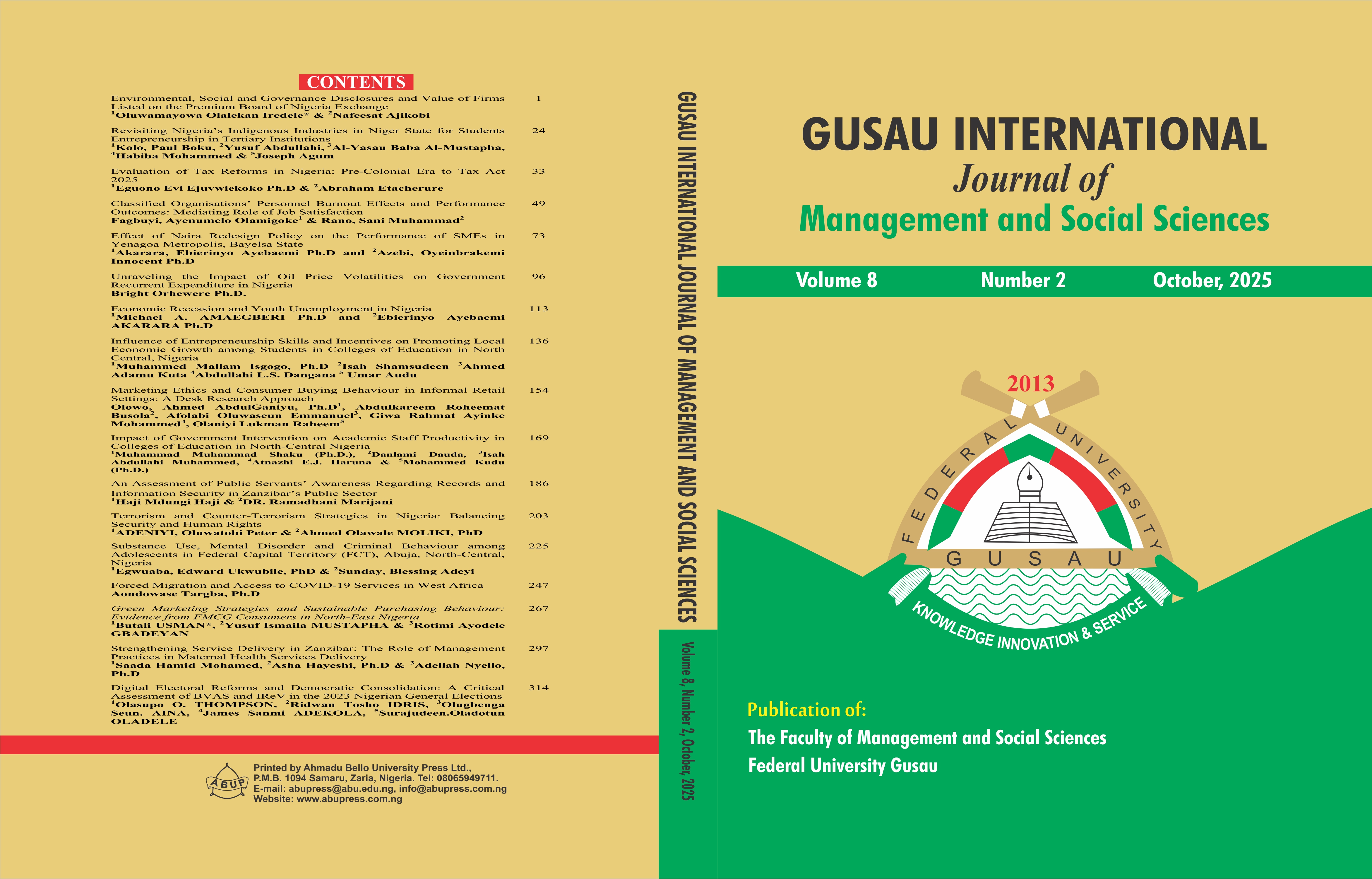
Substance Use, Mental Disorder and Criminal Behaviour among Adolescents in Federal Capital Territory (FCT), Abuja, North- Central, Nigeria
DOI:
https://doi.org/10.57233/gijmss.v8i2.13Keywords:
Adolescents, Criminal Behaviour, Federal Capital Territory, Mental Disorder, Rehabilitation Services, Substance UseAbstract
Adolescent substance use is a major public health, mental health, and security challenge in Nigeria, particularly in the Federal Capital Territory (FCT), Abuja. This study explored the relationships among substance use, mental disorders, and criminal behaviour, guided by Social Disorganization Theory, which links weakened community structures and poor social control to deviant behaviour. A cross-sectional survey was conducted with 400 adolescents aged 13–19 years, selected through multistage sampling across urban and rural communities. Data were collected using structured questionnaires and analysed with SPSS 25 using descriptive statistics, chi-square tests, and logistic regression. Results revealed alcohol (51.5%), cigarettes (39.0%), and cannabis (32.0%) as the most commonly used substances. Depression (59.6%) and aggression (54.0%) were prevalent mental health issues, while theft (43.0%), violence (37.0%), and cultism (26.8%) were common among substance users. Key predictors of use included peer influence, male sex, single-parent households, and low income, yet only 9.5% of adolescents reported access to mental health services. The findings highlight the urgent need for adolescent-focused interventions, including school-based counselling, accessible mental health services, and community-level prevention strategies addressing structural vulnerabilities.
Downloads
Published
How to Cite
Issue
Section
License
Copyright (c) 2025 Author(s)

This work is licensed under a Creative Commons Attribution 4.0 International License.